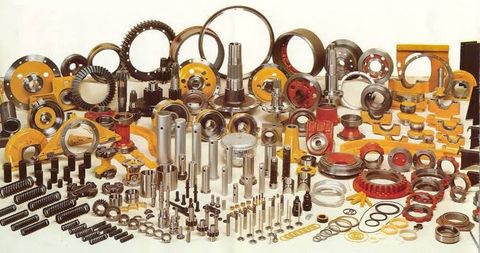
The design of a cone crusher includes a rotating cone-shaped component inside a hardened outer shell. As material enters the crushing chamber, it becomes compressed between the moving cone and the stationary outer surface. This compression gradually reduces the size of the material.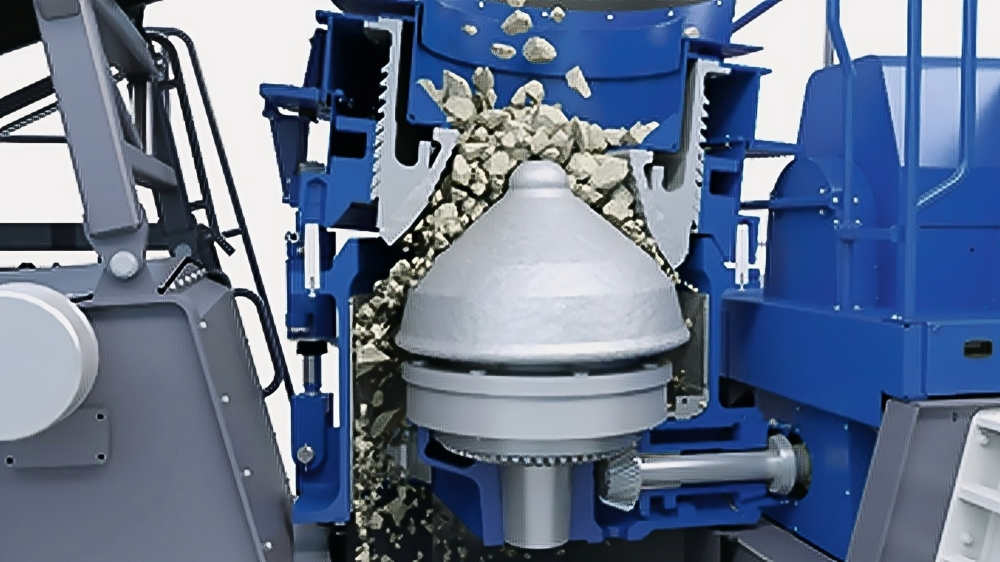
Cone crushers exist because natural rock formations and mined materials are often too large for direct use in construction or industrial processes. Crushing equipment helps convert large stones into smaller fragments that can be used in building infrastructure, road construction, and mineral processing.
Cone crushers are commonly used after primary crushing equipment, such as jaw crushers. While primary crushers handle the largest rocks, cone crushers refine the material into more uniform sizes suitable for specific applications.
The typical components of a cone crusher include:
-
Crushing chamber
-
Mantle and concave surfaces
-
Hydraulic adjustment systems
-
Drive motor and transmission system
-
Control and monitoring systems
The following table illustrates the basic working structure of cone crushers.
| Component | Function |
|---|---|
| Mantle | Rotating crushing surface |
| Concave | Fixed outer surface for compression |
| Feed Opening | Entry point for raw material |
| Hydraulic System | Adjusts crusher settings |
| Drive System | Powers the rotating cone |
These machines are widely used in operations where large volumes of stone or ore must be processed efficiently.
Importance: Why Cone Crushers Matter in Modern Industries
Cone crushers play a key role in industries that depend on processed stone and minerals. Mining operations rely on crushing equipment to extract valuable materials from rock formations. Construction projects require crushed stone for foundations, roadways, and concrete production.
One of the main benefits of cone crushers is their ability to produce consistent particle sizes. This consistency is important for many industrial processes where material size affects structural stability or processing efficiency.
Several industries depend on cone crushers.
Mining Industry
Mineral extraction often involves crushing ore into smaller particles before further processing.
Construction Sector
Infrastructure projects require crushed aggregates for roads, bridges, and buildings.
Quarry Operations
Quarries produce various grades of crushed stone used in landscaping and structural applications.
Recycling Facilities
Crushing equipment may also be used to process construction waste materials for reuse.
The following table highlights common challenges in material processing and how cone crushers help address them.
| Material Processing Challenge | Cone Crusher Solution |
|---|---|
| Large rock sizes | Gradual compression crushing |
| Irregular particle shapes | Uniform crushing chamber design |
| High production demands | Continuous crushing operation |
| Material hardness | Durable crushing components |
| Output consistency | Adjustable crusher settings |
Another important advantage is operational efficiency. Cone crushers are designed to operate continuously under demanding conditions, which helps maintain productivity in mining and construction environments.
Their durability and adaptability make them suitable for a wide range of material types, including granite, limestone, basalt, and various ores.
Recent Updates and Industry Trends
In recent years, crushing equipment technology has evolved to improve efficiency, safety, and environmental performance.
During 2024 and early 2025, several manufacturers introduced advanced automation features in cone crushers. These systems allow operators to monitor machine performance, adjust crushing parameters, and detect mechanical issues using digital control panels.
Another development is the integration of remote monitoring systems. These tools allow engineers to analyze equipment performance data in real time, helping improve maintenance planning and reduce downtime.
Energy efficiency has also become a focus in modern crushing equipment. Updated designs aim to reduce energy consumption while maintaining high productivity.
Automation technologies are also helping improve workplace safety. Sensors and automated shutdown systems can detect irregular conditions and stop equipment to prevent mechanical damage.
The following table outlines recent developments in cone crusher technology.
| Trend | Description | Industry Impact |
|---|---|---|
| Digital Control Systems | Automated crusher monitoring | Improved operational accuracy |
| Remote Monitoring | Real-time performance analysis | Better maintenance planning |
| Energy Efficient Designs | Optimized crushing mechanisms | Reduced energy usage |
| Smart Sensors | Early detection of mechanical issues | Improved equipment safety |
| Integrated Data Systems | Machine performance analytics | Data-driven operations |
These innovations reflect broader efforts to modernize industrial equipment through digital technology and automation.
Laws and Policies Affecting Crushing Operations
Mining and construction equipment, including cone crushers, operates under strict regulatory frameworks designed to ensure worker safety, environmental protection, and responsible resource management.
Workplace Safety Regulations
Industrial machinery must comply with occupational safety standards established by government labor departments. These standards require protective equipment, safety training, and regular machine inspections.
Environmental Protection Laws
Crushing operations may produce dust, noise, and vibration. Environmental regulations require companies to implement dust control systems and noise management measures to reduce environmental impact.
Mining and Quarry Licensing
Mining and quarry activities typically require government permits. Operators must comply with resource extraction policies and environmental impact assessments.
Equipment Certification Standards
Industrial machines must meet engineering safety standards before being deployed in operational environments.
Sustainable Resource Management Policies
Governments encourage responsible extraction of natural resources and sustainable mining practices to reduce environmental damage.
Operators are often required to maintain documentation related to:
-
Equipment inspection and maintenance records
-
Workplace safety procedures
-
Environmental compliance reports
-
Training certifications for machine operators
These regulatory frameworks ensure that crushing operations are conducted responsibly and safely.
Tools and Resources Used with Cone Crushers
Various tools and resources support the operation, maintenance, and monitoring of cone crushers in industrial environments.
Operational Equipment
-
Material feeding systems
-
Conveyor belts
-
Screening equipment
Monitoring and Control Tools
-
Digital crusher control panels
-
Machine monitoring software
-
Sensor-based safety systems
Maintenance Tools
-
Hydraulic service tools
-
Inspection equipment
-
Component wear monitoring systems
Engineering and Design Resources
-
Industrial equipment manuals
-
Engineering design software
-
Equipment performance data systems
Training and Safety Resources
-
Operator training programs
-
Safety guidelines and manuals
-
Industrial equipment certification courses
The following table summarizes categories of tools commonly used in crushing operations.
| Tool Category | Purpose |
|---|---|
| Feeding Systems | Deliver raw material into crushers |
| Monitoring Tools | Track machine performance |
| Maintenance Equipment | Inspect and service machine components |
| Engineering Software | Analyze equipment performance |
| Training Resources | Improve operational safety |
Using these resources helps maintain equipment efficiency and safety standards in industrial environments.
FAQs About Cone Crushers
What is a cone crusher used for?
A cone crusher is used to reduce the size of rocks and minerals in mining, quarrying, and construction applications.
How does a cone crusher work?
It works by compressing material between a rotating cone and a stationary outer surface, gradually breaking the material into smaller pieces.
What materials can cone crushers process?
Cone crushers can process materials such as granite, limestone, basalt, and various mineral ores.
Are cone crushers used in recycling operations?
Yes, some recycling facilities use cone crushers to process construction materials and reduce waste into reusable aggregates.
How are cone crushers maintained?
Regular maintenance includes inspecting wear components, monitoring hydraulic systems, and checking lubrication systems to ensure smooth operation.
Final Thoughts
Cone crushers play an essential role in modern mining and construction industries by transforming large rock formations into usable materials. Their design allows efficient crushing of hard materials while maintaining consistent output sizes.
Technological advancements such as digital monitoring systems, automation, and energy-efficient designs continue to improve the performance and reliability of these machines. At the same time, regulatory standards ensure that crushing operations meet safety and environmental requirements.