Bolt Heading Machines Explained: Types and Uses
Bolt heading machines are specialised metal-forming machines used to create the head of a bolt or similar fastener. They transform a section of metal wire into a shaped head by applying mechanical pressure through dies and punches.
The process is commonly known as heading or upsetting. During this operation, metal material is compressed along its length, causing it to expand into a required shape. The remaining section forms the bolt shank, which can later undergo thread rolling or other finishing operations.
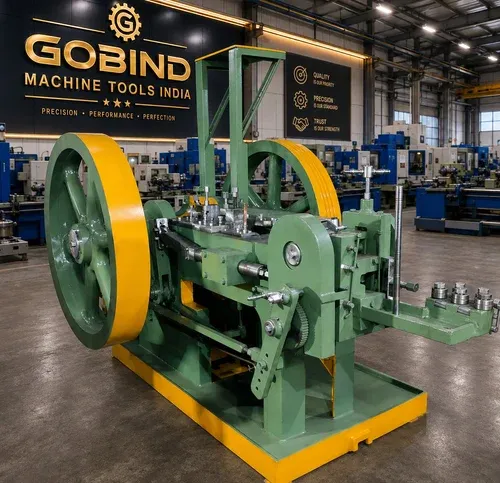
These machines are widely used in fastener manufacturing because they can produce repeated shapes with controlled dimensions.
How Does a Bolt Heading Machine Work?
The working process generally involves several stages:
Wire feeding: Metal wire or rod enters the machine through a feeding mechanism.
Straightening: The material passes through straightening rollers to reduce bends.
Cutting: A cutting mechanism separates a measured section of wire called a blank.
Positioning: The blank moves into the heading die.
Heading: A punch applies pressure, forming the bolt head.
Ejection: The shaped component is released for further processing.
Finishing: Additional operations may include trimming, thread rolling, heat treatment, and surface finishing.
The exact sequence depends on machine design, fastener dimensions, material properties, and the required head shape.
What Materials Are Used in Bolt Heading?
Common materials include carbon steel, alloy steel, stainless steel, and selected non-ferrous metals. Material selection depends on the required mechanical strength, corrosion resistance, hardness, and intended application.
The wire must have suitable ductility because heading involves plastic deformation. Incorrect material properties can cause cracks, surface defects, or dimensional inconsistencies.
Why Are Bolt Heading Machines Important in Manufacturing?
Bolts are essential fastening components used to connect structural parts, machinery, equipment, and industrial assemblies. Their heads provide surfaces that allow tools to apply turning force during installation or removal.
Bolt heading machines help manufacturers produce these components through repeatable forming operations. They also support the production of different head shapes and dimensions according to engineering specifications.
Which Industries Use Bolt Heading Machines?
Several industries depend on bolts manufactured using heading processes:
Automotive: Bolts are used in engines, vehicle frames, suspension systems, and mechanical assemblies.
Construction: Structural bolts connect steel sections, support systems, and building components.
Agriculture: Fasteners are used in tractors, harvesting equipment, and agricultural machinery.
Electrical equipment: Specialised bolts secure electrical enclosures, panels, and mechanical assemblies.
Railways: Fasteners connect selected railway components and infrastructure structures.
Industrial machinery: Bolts hold machine housings, frames, brackets, and moving assemblies together.
What Problems Do These Machines Address?
Manual shaping methods are difficult to apply consistently when manufacturing large quantities of identical fasteners. Heading machines automate the forming stage and help maintain repeated dimensions across production batches.
The process also uses metal deformation instead of removing large amounts of material to create the head. This can reduce material waste compared with certain machining-based manufacturing methods.
However, actual production results depend on machine configuration, material quality, tooling condition, and operator control.
Recent Developments in Bolt Heading Machine Technology
Bolt manufacturing technology continues to develop through automation, improved tooling, digital monitoring, and more controlled forming processes. These changes focus on production consistency, machine operation, and the ability to manufacture different fastener designs.
How Is Automation Changing Bolt Heading Machines?
Modern automatic heading machines use mechanical feeding systems, programmable controls, and monitoring equipment to manage forming operations.
Some machines include sensors that monitor feeding accuracy, machine movement, and operating conditions. These systems can help identify unusual conditions and reduce interruptions caused by feeding or tooling problems.
Computer-controlled systems also allow operators to adjust selected machine parameters according to production requirements.
What Is Changing in Cold Heading Technology?
Cold heading remains an important method for manufacturing bolts, screws, and other fasteners. The process forms metal at or near room temperature without deliberately heating the workpiece for forming.
Current developments include:
Improved die and punch designs for controlling material flow.
Multi-station forming systems for complex fastener shapes.
Automated wire feeding and blank positioning.
Digital monitoring of machine performance.
Improved lubrication methods for reducing friction during forming.
Tooling materials designed to withstand repeated mechanical pressure.
Manufacturers are also examining energy use, material utilisation, and process consistency when planning production systems.
How Are Smart Manufacturing Systems Used?
Some industrial facilities connect heading machines with production monitoring software. These systems can record operating speed, production quantities, machine stoppages, and maintenance information.
Data collected during manufacturing can help supervisors understand equipment performance and identify recurring production problems. However, the level of digital integration varies between machine models and manufacturing facilities.
Bolt Manufacturing Machine Laws and Safety Policies in India
Bolt heading machines involve powerful moving parts, mechanical pressure, cutting mechanisms, and metal-forming operations. Their installation and operation must consider applicable Indian workplace safety and industrial regulations.
Which Indian Regulations Apply to Bolt Heading Machines?
Several legal frameworks are relevant to industrial machinery:
Factories Act, 1948: Contains provisions concerning machinery guarding, workplace safety, and precautions around moving equipment, subject to applicable current legislation.
Occupational Safety, Health and Working Conditions Code, 2020: Establishes a framework addressing occupational safety, health, and working conditions. Its applicable provisions and implementation status should be checked.
BIS Act, 2016: Provides the framework for Indian standards and conformity assessment.
Environment Protection Act, 1986: Covers environmental protection requirements relevant to industrial activities.
State factory rules: May prescribe additional safety measures for machinery, factory operations, and worker protection.
What Safety Measures Are Important?
Heading machines require suitable safeguards because operators work near mechanical forming and cutting mechanisms.
Important precautions include:
Install guards around dangerous moving components.
Use emergency stop mechanisms where required.
Keep hands away from dies and punch areas during operation.
Inspect electrical connections and mechanical components regularly.
Follow approved procedures during tooling changes and maintenance.
Provide appropriate training and personal protective equipment.
Isolate machine power before carrying out maintenance work.
Under the Factories Act, provisions concerning fencing of machinery and casing of moving mechanical components are particularly relevant to industrial equipment.
Types of Bolt Heading Machines: Features and Differences
Bolt heading machines are available in different configurations depending on the forming temperature, number of stations, material dimensions, and production requirements.
What Are the Main Types of Bolt Heading Machines?
Machine type | Main characteristics | Common applications |
|---|---|---|
Cold heading machine | Forms metal without deliberate heating | Standard bolts and screws |
Hot heading machine | Forms heated metal blanks | Large-diameter fasteners |
Single-station machine | Performs heading in one main forming station | Simple bolt heads |
Multi-station machine | Uses multiple forming stages | Complex fastener shapes |
Automatic heading machine | Integrates feeding, cutting, and forming | Repeated production batches |
Nut and bolt forming machine | Designed for specific fastener operations | Industrial fastener manufacturing |
What Is the Difference Between Cold and Hot Heading?
Cold heading and hot heading differ mainly in the temperature at which metal is formed.
Comparison | Cold heading | Hot heading |
|---|---|---|
Material temperature | Near room temperature | Heated before forming |
Metal deformation | Requires substantial forming pressure | Heated material is easier to deform |
Surface condition | Can produce a relatively smooth surface | May require additional surface treatment |
Material properties | Can increase strength through work hardening | Depends on heating and cooling conditions |
Typical applications | Small and medium fasteners | Larger or difficult-to-form components |
What Is the Difference Between Single-Station and Multi-Station Machines?
A single-station machine forms the bolt head through one primary forming operation. It is generally associated with simpler head geometries and relatively straightforward forming sequences.
A multi-station machine transfers the workpiece through several dies and punches. Each station performs a different operation, allowing more complicated head shapes to be formed progressively.
The appropriate configuration depends on component design, material characteristics, required production quantity, and dimensional tolerances.
Tools and Resources for Understanding Bolt Heading Machines
Technical resources help manufacturers understand machine specifications, forming processes, tooling arrangements, and fastener quality requirements.
Which Resources Help Understand Bolt Manufacturing?
Commonly used industry resources include:
Bureau of Indian Standards (BIS): Provides information about Indian standards for fasteners, materials, and industrial equipment.
International Organization for Standardization (ISO): Publishes international standards covering fastener dimensions, mechanical properties, and manufacturing requirements.
Automotive Research Association of India (ARAI): Provides automotive engineering and testing information.
Machine tool technical manuals: Explain installation, machine settings, operation, and maintenance procedures.
Fastener manufacturing documentation: Contains information about bolt dimensions, thread specifications, and material grades.
Which Technical Tools Are Used?
Manufacturers and engineers may use:
Die design software: Helps design heading dies and punches.
Material calculators: Estimate blank dimensions and material requirements.
Production capacity calculators: Estimate output using machine speed and operating time.
Thread measurement instruments: Check thread dimensions and accuracy.
Hardness testing equipment: Evaluates the hardness of manufactured fasteners.
Tensile testing machines: Measure the mechanical strength of finished bolts.
These tools support production planning, quality inspection, and engineering evaluation.
Frequently Asked Questions About Bolt Heading Machines
1. How Do Bolt Heading Machines Work?
They compress metal wire or blanks using dies and punches to form bolt heads through controlled deformation.
2. What Are the Main Types of Bolt Heading Machines?
Common types include cold heading, hot heading, single-station, multi-station, and automatic heading machines.
3. What Is Cold Heading in Bolt Manufacturing?
Cold heading is a metal-forming process that shapes wire or metal blanks without deliberately heating them before forming.
4. Which Industries Use Bolt Heading Machines?
Automotive, construction, agriculture, railways, electrical equipment, and industrial machinery manufacturers use heading-produced fasteners.
5. What Materials Are Used in Bolt Heading Machines?
Common materials include carbon steel, alloy steel, stainless steel, and selected non-ferrous metals, depending on fastener requirements.
Conclusion
Bolt Heading Machines are important equipment in the industrial fastener manufacturing process. They form bolt heads through controlled metal deformation using cold or hot heading methods. Different machine configurations support various fastener designs, production requirements, and material types. Automation, improved tooling, and digital monitoring continue to influence modern bolt manufacturing.

Related Post...
Discover How Industrial Blending Improves Production Consistency and Efficiency
Updated: November 19, 2026
Read More
Learn How Box Packing Machines Improve Ecommerce Packaging Efficiency
Updated: November 19, 2026
Read More