Crane Rental Explained: Types and Key Uses
Crane rental is an arrangement in which a business or contractor uses a crane for a specified period or project. Instead of owning the equipment, the user obtains temporary access through an equipment rental company or crane fleet operator.
Cranes are designed to lift and position heavy materials that cannot be handled easily through manual methods or smaller machinery. Their configurations vary according to lifting capacity, boom length, movement, operating environment, and load requirements.
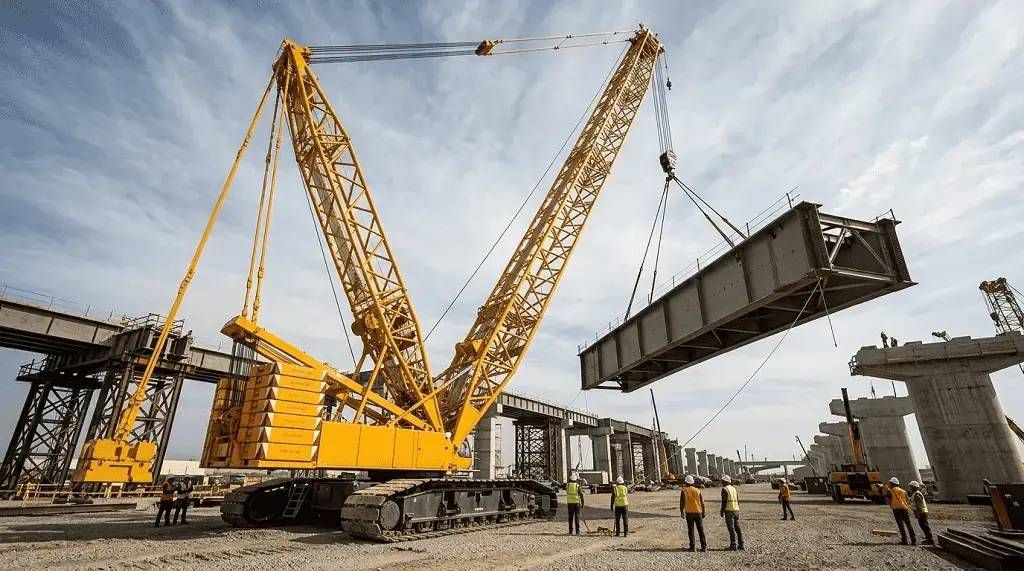
Crane rental arrangements are commonly used in construction, infrastructure development, industrial facilities, ports, and manufacturing plants.
How Does Crane Rental Work?
The process generally involves several stages:
Project assessment: Identify the material weight, lifting height, working radius, and site conditions.
Crane selection: Determine the suitable crane type and rated lifting capacity.
Rental agreement: Confirm the rental period, operator arrangements, transportation, insurance, and other contractual responsibilities.
Site preparation: Check ground stability, access routes, overhead obstructions, and the crane's operating area.
Equipment inspection: Examine the crane, lifting attachments, load chart, and relevant documentation.
Lifting operation: The operator and ground crew perform the planned lifting activity.
Equipment removal: The crane is dismantled or transported away when the work is completed.
What Is Wet Hire and Dry Hire?
Crane rental arrangements commonly follow two models.
Wet hire: The crane is provided with an operator. Depending on the agreement, other personnel and operational arrangements may also be included.
Dry hire: The crane is provided without an operator. The hiring organisation arranges an appropriately qualified operator and manages the agreed operational responsibilities.
The actual responsibilities depend on the rental contract and project requirements.
Why Is Crane Rental Important for Different Industries?
Cranes perform lifting operations across projects where materials, machinery, and structural components must be moved into specific positions. Their use helps organise activities involving heavy loads, elevated locations, and restricted working spaces.
Which Industries Use Crane Rental?
Several industries depend on rented cranes for temporary lifting requirements:
Construction: Lifting steel beams, concrete panels, building materials, and structural components.
Infrastructure: Positioning bridge sections, railway equipment, road structures, and large construction materials.
Manufacturing: Moving industrial machinery, production equipment, and heavy components inside factories.
Shipping and ports: Handling cargo, containers, and heavy materials around port facilities.
Energy: Installing transformers, power equipment, wind turbine components, and industrial structures.
Mining: Moving heavy equipment and supporting selected installation and maintenance activities.
Why Do Projects Use Crane Rental Instead of Ownership?
Crane rental allows project operators to access equipment according to temporary lifting requirements. Different projects may require different crane capacities, boom configurations, and movement capabilities.
For example, a construction project may need a tower crane during building development but require a mobile crane for transporting or positioning equipment at another stage.
Temporary rental arrangements can also reduce the need for equipment storage and long-term fleet management. However, the suitability of rental or ownership depends on project frequency, duration, equipment requirements, and operational planning.
Recent Developments in Crane Rental and Lifting Technology
Crane technology is evolving through digital controls, improved lifting systems, equipment monitoring, and automation. These developments influence how cranes are operated, inspected, and integrated into construction and industrial projects.
How Is Technology Changing Crane Operations?
Modern cranes increasingly use electronic monitoring systems and advanced control mechanisms to support lifting activities.
Some important developments include:
Load monitoring: Sensors and indicators help operators monitor suspended loads and lifting limits.
Anti-collision systems: Electronic controls help detect potential interference between cranes and nearby structures.
Remote monitoring: Connected systems can record equipment condition, operating hours, and maintenance information.
Automated controls: Computer-assisted systems help manage selected crane movements and lifting functions.
Telematics: Digital equipment records help track machine location, operating activity, and maintenance schedules.
What Are the Current Trends in Crane Rental?
The industry is experiencing growing interest in specialised lifting equipment for infrastructure, renewable energy, industrial construction, and large manufacturing facilities.
All-terrain cranes are used where equipment must travel between different ground conditions. Crawler cranes remain relevant for heavy lifting operations requiring tracked movement and a stable working platform.
Electric and hybrid crane technologies are also receiving attention, particularly in projects where noise levels and emissions are important considerations. Their practical suitability depends on lifting requirements, available power infrastructure, and operating conditions.
Crane Rental Laws and Safety Regulations in India
Crane operations involve heavy suspended loads, mechanical equipment, and potential workplace hazards. Indian regulations establish requirements concerning equipment condition, operator training, workplace safety, and lifting procedures.
Which Indian Laws Apply to Crane Operations?
Important regulatory frameworks include:
Occupational Safety, Health and Working Conditions Code, 2020: Establishes the framework for occupational health and workplace safety.
Occupational Safety, Health and Working Conditions (Central) Rules, 2026: Include provisions addressing cranes and hoists, such as load indicators, equipment inspection, operator training, and safe lifting practices.
BIS standards: Provide technical standards and guidance for relevant lifting equipment and crane operations.
Motor Vehicles Act, 1988: Applies to road transportation requirements when mobile cranes and associated transport vehicles use public roads.
Environment Protection Act, 1986: Provides an environmental regulatory framework relevant to industrial and construction activities.
The applicable requirements depend on the type of establishment, equipment, and work being performed.
What Safety Checks Are Important Before Crane Rental?
Before a crane begins operating, project teams should examine:
Rated lifting capacity and the manufacturer's load chart.
Equipment inspection and maintenance records.
Wire ropes, hooks, chains, slings, and lifting attachments.
Ground stability and crane positioning.
Operator competency and relevant training records.
Emergency procedures and communication arrangements.
Nearby electrical lines and physical obstructions.
The 2026 central rules also address warning devices, automatic braking, shift-start checks, and restrictions on working beneath suspended loads.
Types of Cranes: Features and Applications Compared
Different cranes have different movement systems, boom arrangements, and lifting capabilities. The appropriate configuration depends on the load, working radius, ground conditions, and project environment.
What Are the Main Types of Cranes Available for Rental?
Crane type | Main features | Common applications |
|---|---|---|
Mobile crane | Mounted on a wheeled vehicle | Construction and equipment movement |
Tower crane | Tall fixed structure with a horizontal jib | High-rise buildings |
Crawler crane | Uses tracked undercarriage | Heavy industrial lifting |
Rough-terrain crane | Designed for uneven construction surfaces | Remote construction sites |
All-terrain crane | Combines road mobility with off-road capability | Infrastructure and industrial projects |
Truck-mounted crane | Crane installed on a truck chassis | Material transportation and lifting |
Hydraulic crane | Uses hydraulic systems to operate lifting mechanisms | Industrial and construction activities |
Mobile Crane vs Tower Crane: What Is the Difference?
Mobile cranes can travel between locations and are suitable for temporary lifting activities. Tower cranes are generally installed at a fixed location and provide lifting coverage across large construction areas.
Comparison | Mobile crane | Tower crane |
|---|---|---|
Movement | Can travel between locations | Generally fixed during operation |
Installation | Usually requires less site assembly | Requires foundation and erection |
Working height | Depends on boom configuration | Suitable for substantial building heights |
Applications | Roadwork and industrial lifting | Multi-storey construction |
Site requirements | Suitable access and ground support | Structural foundation and installation planning |
How Is Crane Lifting Capacity Determined?
Crane capacity is not determined by machine size alone. The permitted load depends on boom length, working radius, counterweight arrangement, ground conditions, and crane configuration.
The load chart specifies the rated capacity under defined operating conditions. A crane capable of lifting a particular load at a short radius may have a substantially lower permitted capacity when operating at a longer radius.
This is why lifting plans must consider the complete operating configuration rather than relying only on the crane's advertised capacity.
Tools and Resources for Understanding Crane Rental
Technical resources help project planners understand crane specifications, lifting calculations, equipment requirements, and safety procedures.
Which Resources Help With Crane Selection?
Commonly used industry resources include:
Bureau of Indian Standards (BIS): Provides information about Indian technical standards for lifting equipment.
Ministry of Labour and Employment: Publishes workplace safety regulations and industrial compliance information.
National Safety Council of India: Provides occupational safety information and industrial safety guidance.
International Organization for Standardization (ISO): Publishes international standards relating to cranes and lifting equipment.
Manufacturer technical manuals: Explain crane specifications, operating limits, maintenance, and load charts.
Crane selection calculators: Help estimate suitable crane configurations using load weight, lifting height, and working radius.
What Information Is Needed Before Renting a Crane?
Project planners generally collect the following information:
Weight and dimensions of the material.
Required lifting height and horizontal distance.
Site location and ground conditions.
Available working space and access routes.
Required operating period.
Operator and rigging arrangements.
Transportation and installation requirements.
These details help determine the equipment configuration and operational requirements for a particular project.
Frequently Asked Questions About Crane Rental
1. What Is Crane Rental and How Does It Work?
Crane rental allows businesses and contractors to use lifting equipment temporarily under an agreed rental arrangement.
2. What Types of Cranes Are Available for Rental?
Common types include mobile cranes, tower cranes, crawler cranes, rough-terrain cranes, all-terrain cranes, and truck-mounted cranes.
3. Which Crane Is Used for High-Rise Construction?
Tower cranes are commonly used for high-rise construction because their fixed structures and horizontal jibs provide lifting coverage across building sites.
4. What Factors Determine Crane Selection?
Load weight, lifting height, working radius, ground conditions, site access, and equipment configuration influence crane selection.
5. What Safety Documents Are Required for Crane Rental?
Relevant documents may include inspection records, load charts, maintenance records, operator competency documents, and lifting equipment examination records.
Conclusion
Crane Rental provides temporary access to lifting equipment used across construction, infrastructure, manufacturing, and industrial operations. Different crane types perform specialised tasks depending on lifting capacity, working height, mobility, and ground conditions. Modern developments include digital monitoring, automated controls, and improved lifting systems. Understanding equipment specifications, rental arrangements, and Indian safety regulations helps explain how crane rental operations are managed.

Related Post...


Air Conditioning Complete Guide to Modern Cooling Systems and Indoor Comfort
Updated: November 23, 2026
Read More
Discover How Plastic Molding Machines Improve Manufacturing Efficiency and Precision
Updated: November 21, 2026
Read More