Methanol for HPLC Complete Guide to Laboratory Applications and Analytical Performance
In modern laboratories, accurate chemical analysis depends on high-quality solvents and carefully controlled procedures. Among the many solvents used in analytical chemistry, Methanol for HPLC plays an important role in helping researchers achieve reliable and consistent results.
Whether working in pharmaceutical research, environmental testing, food analysis, or academic studies, laboratories frequently rely on methanol as part of their High-Performance Liquid Chromatography (HPLC) workflows.
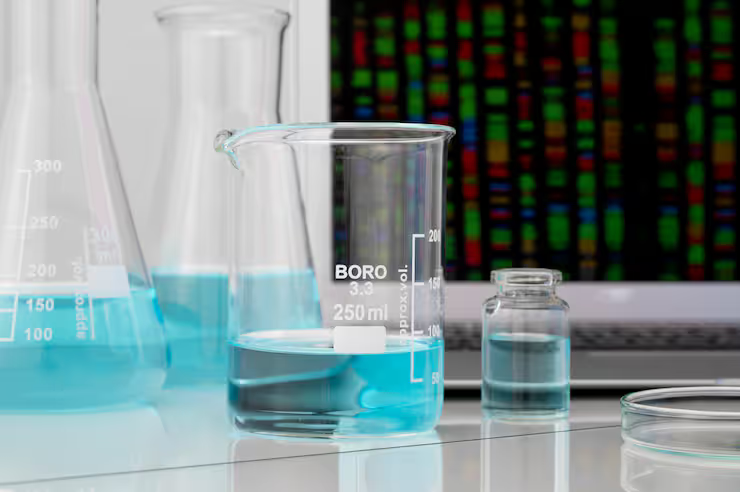
Although HPLC systems involve sophisticated instruments and complex analytical methods, the basic purpose remains straightforward: separating, identifying, and analyzing compounds within a sample. The solvent used during this process can significantly influence the quality of the results. This is where Methanol for HPLC becomes particularly important.
This guide explores the characteristics, laboratory applications, handling considerations, and analytical importance of methanol in HPLC systems, using clear and accessible language for readers who may not have a technical background.
Understanding HPLC and the Role of Methanol
High-Performance Liquid Chromatography is an analytical technique used to separate substances within a mixture. It is widely used across scientific fields because it allows researchers to examine chemical compounds with a high degree of accuracy.
In a typical HPLC system, a liquid solvent carries a sample through a column filled with specialized material. As the sample moves through the column, different compounds travel at different speeds, allowing them to be separated and analyzed.
Methanol for HPLC functions as a mobile phase solvent or as a component of solvent mixtures. Its chemical properties make it suitable for a wide range of analytical procedures.
Common reasons laboratories use methanol include:
- Good compatibility with many analytical methods
- Suitable solvent strength for numerous compounds
- Consistent chemical behavior
- Compatibility with many HPLC instruments
- Reliable performance in gradient and isocratic methods
These characteristics have made methanol one of the most frequently used solvents in liquid chromatography.
What Makes Methanol Suitable for HPLC?
Not all methanol is appropriate for laboratory analysis. Methanol intended for HPLC applications undergoes strict purification processes to minimize impurities that could interfere with analytical results.
High Purity Requirements
Analytical methods require solvents with extremely low impurity levels. Even tiny contaminants can affect chromatography results.
Low UV Absorbance
Many HPLC detectors use ultraviolet light. Methanol for HPLC is produced to minimize background absorbance, helping detectors identify compounds more accurately.
Consistent Composition
Reliable laboratory work depends on consistency. High-purity methanol maintains stable chemical properties between batches.
Instrument Compatibility
Purified methanol helps reduce the risk of unwanted residues that may affect instrument performance.
These characteristics contribute to dependable analytical workflows across many industries.
Common Applications of Methanol for HPLC
Methanol is used in a variety of scientific and industrial laboratories.
Pharmaceutical Analysis
Researchers use HPLC to analyze active ingredients, impurities, and formulation components in pharmaceutical products.
Environmental Testing
Water, soil, and air samples may contain trace chemicals that require detailed analysis through chromatography.
Food and Beverage Testing
Laboratories analyze food products for additives, preservatives, contaminants, and nutritional components.
Academic Research
Universities and research institutions frequently use HPLC systems in chemistry, biology, and environmental science studies.
Chemical Manufacturing
Quality control laboratories often use chromatography to verify product composition and purity.
The versatility of Methanol for HPLC supports many different analytical objectives.
Key Properties of Methanol for HPLC
The following table summarizes some important characteristics that contribute to its widespread use.
| Property | Importance in HPLC |
|---|---|
| High Purity | Reduces analytical interference |
| Low UV Background | Supports UV detector accuracy |
| Good Solvent Strength | Helps dissolve many compounds |
| Consistent Quality | Improves reproducibility |
| Compatibility | Suitable for many chromatographic methods |
| Low Viscosity | Supports efficient flow through columns |
These features help laboratories maintain stable and reliable analytical conditions.
Mobile Phase Applications
One of the primary uses of Methanol for HPLC is as part of the mobile phase.
The mobile phase is the liquid that transports analytes through the chromatography column. Depending on the analytical method, methanol may be used alone or combined with other solvents.
Isocratic Methods
In isocratic analysis, the solvent composition remains constant throughout the run. Methanol can serve as a major component of the mobile phase.
Gradient Methods
Gradient methods gradually change solvent composition during analysis. Methanol is often used alongside water or other solvents to improve separation.
Sample Preparation
Methanol may also be used during sample preparation steps before chromatography begins.
These applications demonstrate its flexibility within laboratory workflows.
Importance of Solvent Quality
The quality of a solvent directly affects analytical performance.
Poor-quality solvents can introduce unwanted substances that appear as extra peaks in chromatograms. These interferences may complicate data interpretation.
Potential issues associated with lower-purity solvents include:
- Increased background noise
- Reduced detector sensitivity
- Unexpected chromatographic peaks
- Shorter column lifespan
- Reduced analytical reproducibility
For these reasons, laboratories typically use solvents specifically prepared for chromatographic analysis.
Laboratory Handling Considerations
Proper handling practices help maintain solvent quality and laboratory safety.
Storage Conditions
Methanol should be stored according to laboratory safety guidelines and manufacturer recommendations.
Container Management
Containers should remain tightly closed when not in use to reduce contamination risks.
Clean Transfer Procedures
Laboratories use clean equipment and controlled procedures when transferring solvents between containers.
Labeling and Documentation
Proper labeling supports traceability and compliance with laboratory protocols.
Maintaining these practices helps preserve solvent integrity throughout its use.
HPLC Detectors and Methanol Compatibility
Different HPLC systems may use various detector technologies.
UV Detectors
Ultraviolet detectors are among the most common. Methanol's low UV absorbance makes it suitable for many UV-based analyses.
Diode Array Detectors
These detectors collect data across multiple wavelengths and often work effectively with methanol-containing mobile phases.
Fluorescence Detectors
Certain analytical methods involving fluorescence detection may also incorporate methanol.
Mass Spectrometry Systems
Some HPLC methods connected to mass spectrometers utilize methanol as part of the solvent system.
Detector compatibility contributes to methanol's widespread use across analytical laboratories.
Current Trends in HPLC Laboratories
Analytical laboratories continue evolving as technology advances.
Increased Automation
Modern laboratories increasingly use automated sample preparation and analysis systems.
Improved Instrument Sensitivity
Newer HPLC systems can detect compounds at lower concentrations than earlier generations.
Data Management Software
Advanced software tools help researchers manage large analytical datasets.
Sustainability Considerations
Many laboratories are evaluating solvent usage practices and waste reduction strategies.
Despite technological changes, Methanol for HPLC remains an important component of many analytical methods.
Quality Control in Chromatography
Quality control procedures help laboratories maintain confidence in analytical results.
Typical quality control measures include:
- Solvent verification testing
- Instrument calibration
- Blank sample analysis
- System suitability testing
- Method validation procedures
These practices help ensure consistency throughout laboratory operations.
Challenges Associated with HPLC Solvents
Every analytical solvent presents certain considerations.
Contamination Risks
Improper storage or handling may introduce impurities.
Method Optimization
Different analytical methods may require adjustments to solvent composition.
Instrument Maintenance
Regular maintenance supports consistent chromatographic performance.
Analytical Variability
Environmental conditions and sample characteristics can influence results.
Understanding these factors helps laboratories maintain reliable analytical processes.
Future Outlook for HPLC Applications
As scientific research continues expanding, chromatography remains one of the most valuable analytical techniques available.
Emerging fields that continue using HPLC include:
- Biotechnology
- Environmental monitoring
- Clinical research
- Food safety testing
- Advanced materials research
The continuing development of analytical science ensures that high-purity solvents will remain essential components of laboratory workflows.
Conclusion
Methanol for HPLC plays a significant role in modern analytical chemistry by supporting accurate and consistent chromatography results. Its high purity, low UV absorbance, and compatibility with various analytical methods make it a widely used solvent across pharmaceutical, environmental, food, and research laboratories. Proper handling, storage, and quality control procedures help maintain its performance throughout laboratory operations. As chromatography technology continues advancing, methanol remains an important part of analytical workflows that support scientific research and quality assessment.

Related Post...

How Industrial Gas Valves Improve Flow Control and System Safety
Updated: September 08, 2026
Read More
Details About Bathroom Remodel Options, Design Choices, and How People Plan Their Projects
Updated: August 12, 2026
Read More
Valve and Pump Manufacturing Complete Advice to Modern Industrial Flow Systems
Updated: September 12, 2026
Read More