Exploring China's Electrical Equipment Manufacturing Industry: Key Products and Applications
China's Electrical Equipment Manufacturing industry covers the design, production, assembly, and testing of machines and components that generate, control, distribute, convert, and use electrical power.
It developed alongside the country's industrial growth, expansion of power networks, construction activity, transport infrastructure, and adoption of factory automation. Its products are used in power stations, substations, commercial buildings, factories, rail systems, renewable-energy projects, and homes.
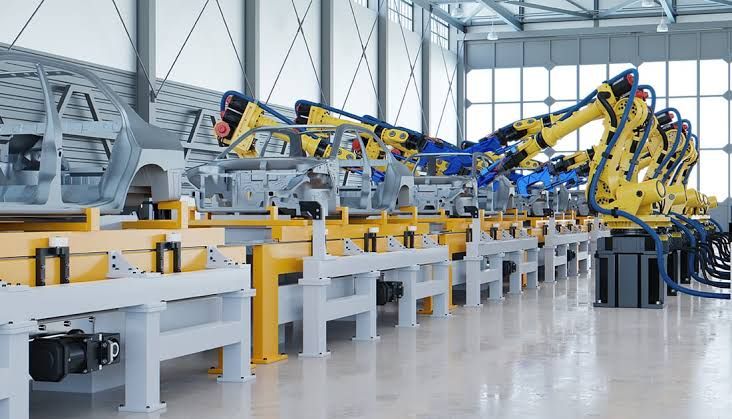
The term covers a broad range of electrical machinery and apparatus. It is related to, but not identical with, consumer electronics manufacturing, which focuses on products such as phones, computers, and televisions. Electrical equipment often has to operate under defined voltage, current, temperature, load, and safety conditions.
Main Product Groups
Manufacturers produce equipment for different stages of an electrical system, from generation to end use. Common groups include:
| Product group | Main application |
|---|---|
| Transformers | Change voltage levels for transmission and distribution |
| Switchgear and circuit breakers | Control circuits and isolate electrical faults |
| Motors and generators | Convert electrical and mechanical energy |
| Cables, connectors, and insulators | Carry power and separate conductive parts |
| Inverters and converters | Change electrical power between forms for grids and renewable systems |
| Control panels and protection devices | Monitor equipment and manage industrial processes |
Importance
Electrical equipment affects the reliability and safety of systems used every day. Transformers and switchgear help deliver electricity through networks, while motors operate pumps, fans, compressors, production lines, and building systems. Equipment failures can interrupt manufacturing, transport, water pumping, communications, and other essential activities.
Applications Across Industries
The power sector uses generators, transformers, switchgear, substations, and grid-control equipment. Renewable-energy projects use inverters, converters, power-control systems, and electrical connections for solar and wind installations. Factories use motors, drives, control cabinets, sensors, and protection devices to operate machinery and monitor processes.
Construction and transport are also important users. Buildings need distribution panels, wiring, lighting controls, and backup-power equipment. Railways, electric vehicles, ports, and charging networks use different types of traction, conversion, and power-distribution equipment.
What Shapes Equipment Selection?
The correct product depends on its technical purpose. Project teams consider rated voltage, current, capacity, frequency, efficiency, insulation class, protection rating, temperature range, and operating cycle.
Recent Updates
From 2024 to 2026, Chinese policy and industry activity placed greater attention on equipment renewal, energy efficiency, digital manufacturing, and power equipment for renewable energy. These changes affect product development as well as factory processes.
Production and Market Trends
China's National Bureau of Statistics reported that the value added of electrical machinery and apparatus manufacturing rose by 9.2 percent in 2025 compared with the previous year. Output of power-generation equipment also increased during the year. The figures describe a broad industry category, not the experience of every manufacturer.
Equipment Upgrades and Renewable Energy
A 2024 industrial equipment renewal plan encouraged upgrades to motors, transformers, pumps, and other energy-using equipment, alongside digital and green manufacturing improvements. A separate power equipment action plan for 2025–2026 addressed wind and solar equipment, energy storage, and the use of information technology in production.
In 2026, a further three-year plan focused on energy-saving equipment, including more efficient motors and transformers, key materials, and wider use of digital technologies such as artificial intelligence. These policies reflect a shift towards equipment that uses energy more efficiently and can be monitored or controlled through connected systems.
Laws or Policies
Electrical equipment manufacturing in China is shaped by product quality rules, national standards, energy-efficiency requirements, and compulsory certification for specified products. The exact obligations depend on the equipment category, technical characteristics, intended use, and whether it is sold domestically or exported.
China Compulsory Certification
China's Compulsory Certification system, commonly called CCC, applies to products included in the official catalogue. Covered products must complete the required conformity assessment and carry the CCC mark before they can be released from the factory, sold, imported, or used in business activities. The catalogue includes certain wires and cables, low-voltage electrical components, and other product groups; it does not apply automatically to every electrical machine.
Manufacturers should check the current catalogue and product rules. Certification may involve testing, factory assessment, and continuing checks.
National Standards and Energy Efficiency
China uses national standards, commonly identified by the letters GB, to define technical, safety, testing, and performance requirements. Some standards are mandatory, while others are recommended. GB 20052-2024, for example, sets minimum energy-efficiency limits and grades for power transformers and took effect in 2025.
Exporters must also meet the destination market's conformity rules; domestic approval does not automatically replace them.
Tools and Resources
Technical documents help manufacturers, project teams, and importers assess whether a product is suitable for an application. Useful references include:
| Resource | Information to check |
|---|---|
| CCC catalogue and rules | Whether certification applies to the product |
| National standards database | Current GB standards and their status |
| Product datasheet | Rated voltage, current, capacity, efficiency, and protection rating |
| Type-test report | Results from specified electrical and safety tests |
| Factory quality records | Inspection methods, traceability, and production consistency |
A comparison sheet can record model numbers, ratings, test documents, certification status, and intended use. Larger projects may also require wiring diagrams, installation instructions, and maintenance schedules.
FAQs
What products are included in China's Electrical Equipment Manufacturing industry?
Common products include transformers, generators, electric motors, switchgear, circuit breakers, cables, inverters, converters, control panels, and electrical protection devices.
Where is electrical equipment used?
It is used in power generation and distribution, factories, buildings, transport networks, renewable-energy installations, water systems, and charging infrastructure.
What recent changes are affecting China's Electrical Equipment Manufacturing?
Recent developments include equipment renewal programmes, higher attention to motor and transformer efficiency, renewable-power equipment, energy storage, and digital factory technologies.
Does all electrical equipment made in China need CCC certification?
No. CCC applies to products listed in the official catalogue. The applicable product description and certification rules should be checked for each specific item.
What should importers check when sourcing electrical equipment from China?
They should review technical ratings, test reports, applicable CCC status, manufacturing records, product traceability, documentation, and the destination country's conformity requirements.
Conclusion
China's electrical equipment manufacturing sector produces machinery and components used across power networks, industry, buildings, transport, and renewable energy. Its product range includes transformers, motors, switchgear, cables, and power-conversion equipment. Recent policy developments place emphasis on efficiency, digital production, and grid-related equipment. Product standards, certification, and application requirements remain central to safety and reliable operation.

Related Post...

VinFast MPV 7 Complete Suggestions to Design Technology and Family Mobility Features
Updated: November 19, 2026
Read More
Exploring China's Electrical Equipment Manufacturing Industry: Key Products and Applications
Updated: November 19, 2026
Read More
How to Choose a Trusted Astrologer for Career, Relationship, and Life Questions
Updated: November 19, 2026
Read More