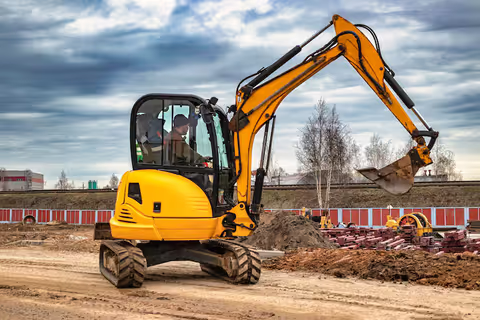
Mini excavator size classes are typically defined by operating weight, which includes the machine, fluids, operator, and standard attachments. These size categories help contractors and equipment operators select the appropriate machine for specific job requirements. Choosing the correct size affects productivity, fuel efficiency, transportation logistics, and site safety.

Manufacturers classify mini excavators into general size ranges such as under 1 ton, 1–2 tons, 2–3 tons, 3–5 tons, and 5–6 tons. Each class is designed to handle different levels of digging depth, lifting capacity, and attachment compatibility.
The classification system exists to simplify equipment selection and improve job efficiency by matching machine capability with project demands.
Importance: Why Mini Excavator Size Classes Matter Today
Construction and infrastructure projects increasingly take place in urban environments where space is limited. Mini excavators offer a practical solution for working in narrow areas such as residential yards, indoor sites, and road maintenance zones.
Why Size Selection Matters
-
Ensures optimal performance for specific tasks
-
Reduces fuel consumption and operational costs
-
Improves safety by preventing overloading
-
Enhances maneuverability in confined spaces
-
Minimizes ground disturbance
Who Is Affected
-
Construction contractors
-
Landscaping professionals
-
Utility and pipeline installers
-
Rental equipment companies
-
Municipal maintenance teams
Common Problems Solved by Correct Size Selection
| Challenge | Impact of Incorrect Size | Benefit of Correct Size |
|---|---|---|
| Limited work area | Restricted movement | Improved maneuverability |
| Overpowered equipment | Higher fuel usage | Cost efficiency |
| Insufficient lifting capacity | Reduced productivity | Better task completion |
| Transportation difficulties | Higher logistics costs | Easier transport |
| Soil damage | Excessive ground pressure | Controlled footprint |
Selecting the appropriate size class ensures that equipment aligns with workload requirements without unnecessary expense or operational strain.
Overview of Mini Excavator Size Classes
Mini excavators are commonly grouped by operating weight and power capacity.
Under 1 Ton
-
Lightweight and compact
-
Suitable for indoor demolition and light landscaping
-
Easy to transport in small trailers
1–2 Tons
-
Popular for residential projects
-
Effective for trenching and small utility installations
-
Improved digging depth compared to sub-compact models
2–3 Tons
-
Balanced combination of power and maneuverability
-
Frequently used for landscaping and minor construction tasks
-
Compatible with various attachments
3–5 Tons
-
Increased lifting capacity
-
Suitable for medium-scale construction
-
Greater stability and digging force
5–6 Tons
-
Upper range of mini excavators
-
Handles heavier tasks while remaining compact
-
Often equipped with advanced hydraulic systems
Each size class offers different capabilities in terms of reach, bucket size, and attachment compatibility.
Recent Updates and Industry Trends
The compact equipment industry continues to evolve with technological improvements and sustainability considerations.
Electrification in 2025
In 2025, several manufacturers expanded their electric mini excavator models. These machines are designed for reduced emissions and quieter operation, making them suitable for urban and indoor environments.
Telematics Integration
Recent models increasingly include telematics systems that track fuel usage, operating hours, and maintenance schedules. These features improve fleet management and cost tracking.
Enhanced Safety Features
Manufacturers have added improved operator cabins, better visibility systems, and advanced stability controls to enhance workplace safety.
Compact Design Improvements
Updates in hydraulic efficiency and compact swing radius designs allow machines to operate in tighter spaces without sacrificing power.
Rental Market Growth
The rental equipment market has grown steadily through 2025, increasing demand for versatile mid-range mini excavators suitable for diverse short-term projects.
Laws and Policies Affecting Mini Excavator Use
Mini excavator operation is subject to safety and environmental regulations in many countries.
Operator Certification and Safety Standards
In India, operators may need training certifications depending on project scale and employer policies. Workplace safety guidelines are governed by labor and industrial safety regulations.
In the United States, Occupational Safety and Health Administration (OSHA) standards apply to equipment operation and job site safety.
In the European Union, machinery must comply with CE marking requirements and workplace safety directives.
Emission Regulations
Environmental standards increasingly influence equipment design. Emission norms require engines to meet specific environmental performance levels. Electric mini excavators are gaining attention in response to stricter urban emission controls.
Local Construction Guidelines
Municipal authorities may regulate working hours, noise levels, and equipment size restrictions in residential areas.
Compliance with these regulations ensures safe operation and responsible environmental practices.
Tools and Resources for Selecting the Right Size
Choosing the appropriate mini excavator involves careful evaluation of project requirements and machine specifications.
Manufacturer Specification Sheets
Most manufacturers provide detailed data on:
-
Operating weight
-
Digging depth
-
Bucket capacity
-
Hydraulic power
-
Transport dimensions
Equipment Comparison Platforms
Online equipment marketplaces and comparison websites allow users to review features, specifications, and performance ratings.
Rental Consultation Services
Rental companies often provide guidance on selecting suitable equipment based on job size and duration.
Project Planning Tools
-
Construction project management software
-
Cost estimation templates
-
Load capacity charts
-
Fuel consumption calculators
Fleet Management Systems
Telematics platforms help contractors monitor usage patterns and determine optimal equipment allocation.
Using these tools can support informed decision-making and improve operational efficiency.
Performance Comparison by Size Class
| Size Class | Typical Application | Key Advantage |
|---|---|---|
| Under 1 Ton | Indoor and light tasks | High portability |
| 1–2 Tons | Residential trenching | Easy maneuverability |
| 2–3 Tons | Landscaping and utilities | Balanced power |
| 3–5 Tons | Medium construction | Increased lifting strength |
| 5–6 Tons | Heavy compact projects | Strong hydraulic capacity |
Understanding these categories helps align equipment capabilities with specific project goals.
FAQs
What determines a mini excavator’s size class?
Size class is primarily determined by operating weight, which includes the machine, fluids, and operator.
How do I choose the right mini excavator size?
Consider factors such as job site space, digging depth requirements, lifting capacity, transportation logistics, and budget.
Are electric mini excavators suitable for all projects?
Electric models are well-suited for indoor or urban environments but may have limitations in runtime compared to diesel-powered machines.
Do mini excavators require special operator training?
Training requirements vary by country and employer policies, but proper instruction and safety knowledge are essential.
Can attachments be used across all size classes?
Attachment compatibility depends on hydraulic capacity and machine specifications. Always verify manufacturer recommendations.
Final Thoughts
Mini excavator size classes provide a practical framework for selecting equipment that matches project requirements. From lightweight sub-compact models to heavier compact machines, each category serves distinct construction and landscaping needs.
As technology advances and environmental standards evolve, modern mini excavators offer improved efficiency, safety, and sustainability features. By understanding size classifications, regulations, and available tools, contractors and operators can make informed decisions that enhance productivity and operational performance.